A teeth falling out dream ranks among the most common dream themes people report, and almost everyone who has one wakes up unsettled. The honest answer to what it means is layered: there’s no single proven interpretation, but the evidence points more toward your stress levels and your jaw than toward any mystical omen. Most of the time, it’s not a warning about anything.
This guide separates what research actually supports from what’s popular folklore. It also uses survey data on how people themselves interpret the dream, then ends with the practical part: when a recurring teeth-loss dream is worth doing something about, and who to see.
How people interpret the dream
When researchers surveyed people who had experienced teeth-falling-out dreams and believed dreams carry meaning, a clear hierarchy emerged. Stress dominated, followed by a sense of lost control, with physical and emotional explanations clustered behind them.
| Interpretation | Share of respondents |
|---|---|
| Increased stress | 27% |
| Lack of control | 20% |
| Real-life dental issues | 14% |
| Health-related fear | 14% |
| Recent loss or grief | 12% |
| Big life changes | 12% |
| Jealousy | ~1% |
The pattern is telling. The two readings people reach for most, stress and lost control, are also the two with the most scientific backing. The interpretations rooted in symbolism alone, like jealousy, sit at the bottom. That alignment between popular instinct and research is rare in dream interpretation, and it’s a good reason to take the stress angle seriously rather than chasing exotic meanings.
The stress and anxiety connection
The strongest, most repeatable link is between teeth-loss dreams and stress. Broadly, studies show people have more bad dreams and nightmares when they’re under pressure, and teeth-falling-out dreams ride that wave with everything else.
A clear real-world example came at the start of the COVID-19 pandemic, when lockdowns, isolation, and uncertainty spiked. Reports of bad dreams rose, teeth-loss dreams among them. The mechanism is straightforward: a stressed brain produces more negative dream content, and this particular image is a common form that content takes. If you’re going through a high-pressure stretch at work or home and the dream shows up, that timing is probably not a coincidence. It’s the most parsimonious explanation, and usually the correct one.
The “losing control” reading
Close behind stress is the sense of losing control, and it has research support too. Teeth are permanent fixtures you rely on without thinking; having them crumble or drop out is a vivid stand-in for things slipping out of your hands.
Studies suggest dreams can give people insight into their emotional state, and one found that college students who had teeth-loss dreams were also more likely to report feeling a loss of control over their lives. The dream, in that framing, isn’t predicting anything. It’s reflecting a feeling you may already carry in waking life but haven’t fully named. People often notice the dream clusters around moments when their circumstances feel governed by outside forces, which fits this interpretation neatly.
When it’s physical, not symbolic
Here’s the explanation most people skip, and it may be the biggest one: your dream might be reporting a real sensation in your mouth. Research has found that genuine bodily sensations during sleep, including pain, can get woven directly into dream imagery.
If you grind your teeth or clench your jaw at night, a habit far more common than people realize, your sleeping brain may translate that pressure and discomfort into the literal image of teeth falling out. This reframes the whole question. The dream isn’t necessarily a metaphor for grief or change; it can be your nervous system narrating what your jaw is physically doing. There’s even a possible loop here: stress causes grinding, grinding creates the sensation, and the sensation produces the dream, which is why stress and dental causes keep overlapping in the data. Dream researchers have called these dreams “especially enigmatic” precisely because they don’t tie neatly to daytime events the way most dreams do, and the physical-sensation theory is currently the leading attempt to explain why they’re so widespread.
The interpretations with weaker evidence
Several popular readings are plausible but largely unstudied, so they deserve a lighter touch. They may be true for some people without being general explanations.
- Recent loss or grief. Because teeth are essential, losing them can symbolize losing something important, a job, a relationship, a person. The idea that dreams turn real experiences into figurative images lends it some credibility, but no study has directly tied grief to teeth-loss dreams.
- Big life changes. People literally lose teeth during major transitions, in childhood and again in older age, so some link the dream to events like graduation or pregnancy. It’s intuitive but untested.
- Health-related fears. Dreams sometimes dramatize a fear of illness, and teeth falling out is a vivid way for the mind to stage that worry.
- Insecurity or shame. Since teeth are central to appearance, their loss can stand in for anxiety about how you’re seen, or about something else you fear losing.
- Jealousy. The weakest of the set, supported only by general findings that envy can surface in dreams, with no specific link to teeth.
Treat these as possibilities to reflect on, not diagnoses. If one resonates strongly with your current life, it may be meaningful for you personally, but the science doesn’t elevate any of them to a rule.
The mental health angle, handled carefully
There’s a long-noted association between nightmares and conditions like depression and anxiety, and an older study did find a link between depression and teeth-loss dreams specifically. More recent research hasn’t confirmed it, so the connection is uncertain rather than established.
What’s worth knowing is that some antidepressants can cause more intense, unusual, or vivid dreams when you start, change, or stop them. A single teeth-loss dream means none of this. But if these dreams come alongside persistent low mood, ongoing anxiety, or disrupted sleep, that combination is worth raising with a professional, not because the dream itself is dangerous, but because the underlying feeling might deserve support.
What to actually do about it
For most people, the answer is nothing. These dreams are common, usually harmless, and not a sign you need to change anything. Having one now and then is part of normal dreaming life.
The time to act is when the dreams become recurring or distressing enough to affect your sleep. Two professionals can help, depending on the likely cause. A dentist can check whether nighttime grinding or a tooth or gum issue is feeding the sensation behind the dream, which addresses the physical theory directly. A therapist can help if the dreams seem tied to anxiety, low mood, or a stressful period, addressing the emotional side.
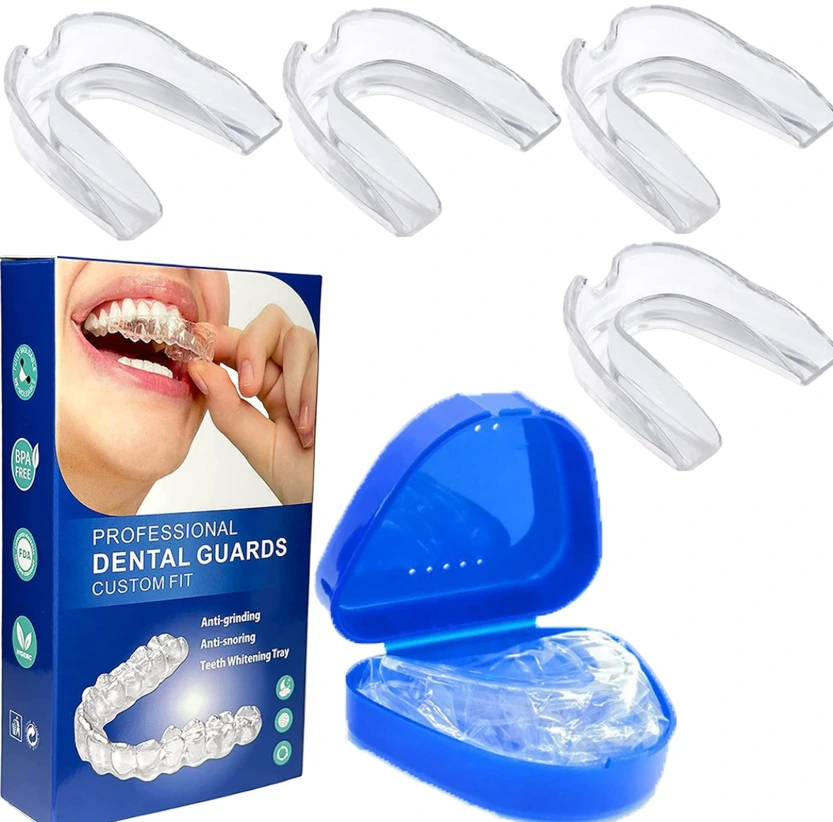
Improving sleep quality also appears to reduce nightmares in general. The basics do the heavy lifting: skip caffeine and alcohol in the evening, keep a consistent sleep and wake time, cut screens before bed, and keep the room dark, quiet, and comfortably cool. If you suspect grinding specifically, a dentist can confirm it and may suggest a night guard, which can quietly remove the trigger you’ve been dreaming about.
This is a sensitive area for some readers, and if these dreams are showing up alongside ongoing distress, speaking with a doctor, dentist, or mental health professional is a reasonable next step rather than trying to decode the dream alone.